
Exfoliation 101: AHAs, BHAs, and PHAs Explained
Date: 24.09.2025 18:57
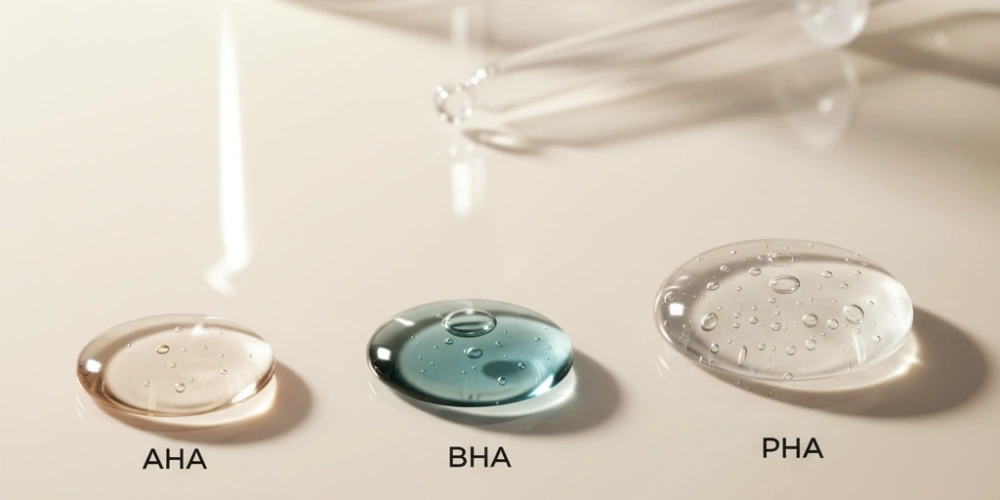
Understand how AHAs, BHAs, and PHAs work, which acids fit your skin type, and how to layer them safely for smoother texture, clearer pores, and brighter tone—without over-exfoliating.
Contents
- Why Exfoliation Matters
- Meet the Acids: AHAs, BHAs, and PHAs
- How They Work: pH, Concentration, and Contact Time
- Which Acid Fits Your Skin Type and Goals?
- Building a Safe Exfoliation Routine
- Layering With Other Actives
- Special Use Cases and Tips
- Signs You’re Over-Exfoliating
- Product Texture and Packaging
- Common Myths, Debunked
- Troubleshooting
- Routine Blueprints by Skin Type
Exfoliation 101: AHAs, BHAs, and PHAs Explained
A practical, science-informed guide to chemical exfoliation. Learn what AHAs, BHAs, and PHAs do, how to choose the right acid for your skin type, safe concentrations and pH, how to layer without irritation, routine blueprints, and common myths—plus ready-to-use SEO metadata.
Why Exfoliation Matters
- Smoother texture and glow: Removes built-up dead cells to reveal brighter skin.
- Clearer pores and fewer breakouts: Helps keep pores unclogged and refines their appearance.
- Better product penetration: Boosts efficacy of serums and moisturizers.
- Balanced approach: Overdoing it damages the barrier—technique beats strength.
Meet the Acids: AHAs, BHAs, and PHAs
AHAs (Alpha Hydroxy Acids)
- Water-soluble; work mainly on the skin’s surface to loosen dead cells.
- Common types: Glycolic, lactic, mandelic, tartaric, malic.
- Best for: Dullness, uneven tone, fine lines, dry/normal skin.
- Notes: Glycolic penetrates fastest (more potent, more irritating). Lactic is gentler and hydrating. Mandelic is great for sensitive or deeper skin tones due to larger molecule size.
BHAs (Beta Hydroxy Acids)
- Oil-soluble; can penetrate into pores to dissolve sebum and debris.
- Common type: Salicylic acid (the primary cosmetic BHA).
- Best for: Oily, acne-prone, blackheads, visible pores, congestion.
- Notes: Mild anti-inflammatory; good spot or T-zone use for combo skin.
PHAs (Polyhydroxy Acids)
- Larger molecules (e.g., gluconolactone, lactobionic acid) with humectant properties.
- Best for: Sensitive, reactive, rosacea-prone, or barrier-impaired skin; gentle daily polishing.
- Notes: Exfoliate more slowly; add hydration and antioxidant benefits.
How They Work: pH, Concentration, and Contact Time
- pH matters: Acids work best at lower pH; too high and they’re ineffective, too low and irritation rises.
- Concentration: Higher isn’t always better—choose the lowest effective strength you can tolerate consistently.
- Leave-on vs. rinse-off: Leave-ons (toners/serums) offer steady results; peels/masks are stronger and occasional.
Typical consumer ranges:
- AHAs: Glycolic 5–10% (daily/alternate); 20%+ as peels (pro use or occasional masks). Lactic 5–10% gentle daily.
- BHA: Salicylic 0.5–2% leave-on; 2% common in toners/serums.
- PHAs: 3–10% gentle daily polishing.
Which Acid Fits Your Skin Type and Goals?
Dry/Dehydrated
- Pick lactic 5–10% or PHAs for glow without stripping.
- Avoid frequent strong glycolic at first; buffer with moisturizer.
Oily/Acne-Prone
- BHA 1–2% for pores, blackheads, and T-zone control.
- Can combine with low AHA (e.g., mandelic 5–10%) on off nights for tone.
Combination
- Zone strategy: BHA on T-zone; AHA/PHAs on drier areas.
- Alternate days to avoid irritation.
Sensitive/Reactive or Rosacea-Prone
- Start with PHAs or mandelic 5–10% 2–3x/week.
- Patch test; avoid stacking with strong retinoids initially.
Uneven Tone/Hyperpigmentation
- Glycolic or lactic 5–10% regularly + strict SPF; mandelic for deeper skin tones to minimize PIH risk.
- Consider azelaic acid on alternate days for added tone support.
Texture/Fine Lines
- Lactic 10% or glycolic 5–8% 2–4x/week; retinoids at night on separate days.
Building a Safe Exfoliation Routine
- Start low and slow: 2–3x/week, then increase as tolerated.
- Use a pea-sized amount or a saturated cotton pad—no scrubbing pressure.
- Avoid the immediate eye contour and corners of nose/mouth until tolerance builds.
- Always pair with daily sunscreen; exfoliation increases photosensitivity.
Example schedules:
- Beginner (Normal/Dry): Mon & Thu PM — Lactic 5% → Moisturizer
- Oily/Clogged: Tue/Thu/Sat AM — BHA 2% → Hydrator → SPF
- Sensitive: Wed & Sun PM — PHA 5% → Ceramide cream
Layering With Other Actives
- Simple order: Cleanse → Acid → Hydrator/Serums → Moisturizer → SPF (AM).
- With vitamin C: If using L-ascorbic acid, apply it on alternate mornings or separate from strong AHAs to reduce sting.
- With retinoids: Alternate nights or buffer heavily; avoid starting both simultaneously.
- With niacinamide: Generally compatible and soothing—great follow-up after acids.
- With benzoyl peroxide: Can be drying; consider BHA AM, BP PM (or vice versa).
Special Use Cases and Tips
- “Slugging” and acids: Don’t occlude immediately after strong acids if you’re sensitive—trap can intensify penetration.
- Masking: Weekly AHA mask (10–15%) can boost glow—replace one of your weekly leave-on sessions, don’t stack.
- Body care: KP/roughness—use BHA 2% or AHA 10–12% lotions 3–5x/week; sunscreen on exposed areas.
- Shaving: Avoid strong acids right before/after shaving to reduce sting.
Signs You’re Over-Exfoliating
- Tightness, stinging, shiny-but-tight look, increased redness or breakouts, flaking.
- What to do: Stop acids for 5–7 days; switch to barrier repair (ceramides, cholesterol, fatty acids, panthenol),and resume at lower frequency/strength.
Product Texture and Packaging
- AHAs: Often watery toners or lightweight serums; opaque or UV-protective packaging is ideal.
- BHA: Gels or lightweight liquids to penetrate pores; avoid heavy occlusives if acne-prone.
- PHAs: Hydrating toners/serums or creams; excellent in winter routines.
Common Myths, Debunked
- “Higher percentage = better results.”
Consistency and tolerance trump strength; too strong can backfire. - “Acids thin the skin.”
They exfoliate the stratum corneum but can thicken the living epidermis over time via renewal. - “You can’t mix acids with niacinamide/vitamin C.”
Many modern formulas coexist; if irritation occurs, separate by time or days.
Troubleshooting
- Stinging on application: Reduce frequency, switch to PHA/mandelic, apply over slightly damp skin with caution or buffer with a hydrating serum.
- Pilling with makeup: Let acids dry down fully; simplify layers; choose compatible textures.
- New breakouts: Distinguish purge vs. irritation—acids don’t usually cause purging like retinoids; cut back and focus on barrier if inflamed.
Routine Blueprints by Skin Type
Dry/Normal (Glow & Comfort)
- AM: Rinse or creamy cleanse → Hydrating serum → Moisturizer → SPF
- PM (2–3x/week): Cleanse → Lactic 5–10% → Peptide or HA serum → Rich cream
- PM (off nights): Barrier serum → Cream
Oily/Acne-Prone (Pores & Control)
- AM (3–5x/week): Cleanse → BHA 1–2% → Lightweight hydrator → Oil-free SPF 50
- PM: Cleanse → Retinoid or azelaic (alternate with BHA days) → Gel-cream
Sensitive/Reactive (Calm & Smooth)
- AM: Gentle cleanse → PHA 3–5% (2x/week) → Soothing serum → Mineral SPF
- PM: Cleanse → Barrier serum (ceramides/panthenol) → Cream
Tone & PIH Focus (Even & Bright)
- AM: Vitamin C derivative → Moisturizer → SPF (tinted preferred for visible light)
- PM (2–4x/week): Mandelic 5–10% → Niacinamide → Moisturizer
Related Products