
A Complete Guide to Sunscreen: Mineral vs. Chemical, SPF, and Reapplication
Datum: 24.09.2025 18:57
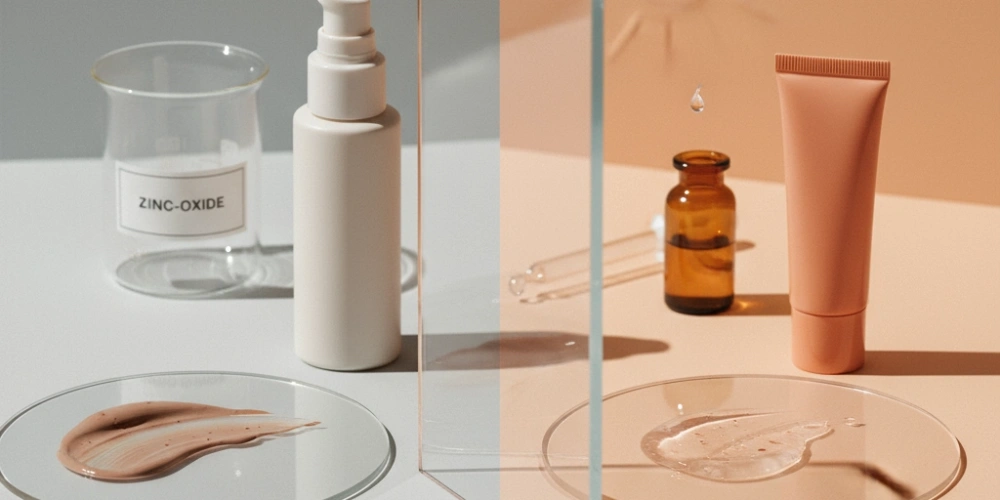
Understand mineral vs chemical sunscreens, what SPF and PA/UVAPF mean, how much to apply, and when to reapply. Get practical routines and troubleshooting tips so you’ll actually enjoy wearing sunscreen daily.
Inhalt
- Why This Guide Matters
- UV Basics: What Are We Protecting Against?
- SPF, PA, and UVAPF Explained
- Mineral vs. Chemical Sunscreens
- Choosing by Skin Type and Concern
- How Much, How Often, and How to Apply
- Water Resistance and Outdoor Scenarios
- Layering with Skincare and Makeup
- Special Populations and Situations
- Common Myths, Debunked
- Daily Routines: Examples by Skin Type
- How to Pick a “Good” Sunscreen at a Glance
- Troubleshooting
A Complete Guide to Sunscreen: Mineral vs. Chemical, SPF, and Reapplication
A practical, science-informed guide to choosing and using sunscreen. Learn the differences between mineral and chemical filters, how SPF and PA/UVAPF actually work, how much to apply and how often to reapply, plus routine examples and myths debunked—with ready-to-use SEO metadata.
Why This Guide Matters
- UV damage is cumulative: Photoaging and skin cancer risk build over time—even on cloudy days.
- Filter choice affects comfort and compliance: The “best” sunscreen is the one you’ll wear enough and reapply.
- Technique matters: Correct amount, even coverage, and smart reapplication make the biggest difference.
UV Basics: What Are We Protecting Against?
- UVA (320–400 nm): Penetrates deeper; drives photoaging, hyperpigmentation, and contributes to skin cancer. Present all year, all day, through windows.
- UVB (280–320 nm): Causes sunburn and directly damages DNA; intensity varies by season, altitude, and time of day.
- HEVL/Visible light (esp. blue light): Can worsen hyperpigmentation in deeper skin tones; iron oxides in tints can help.
SPF, PA, and UVAPF Explained
- SPF (Sun Protection Factor): Measures UVB protection. SPF 30 blocks ~97% UVB; SPF 50 ~98%. The difference seems small, but in strong sun it’s meaningful.
- PA rating (PA+, PA++, etc.): Asian system reflecting UVA protection based on PPD/UVAPF values.
- UVAPF/PPD: Numeric UVA protection. In the EU, UVA must be at least 1/3 of the labeled SPF (the “UVA circle” mark).
- Bottom line: For daily use, pick at least SPF 30 broad spectrum; for extended outdoor exposure, SPF 50 is smart.
Mineral vs. Chemical Sunscreens
Mineral (Inorganic) Filters
- Actives: Zinc oxide, titanium dioxide.
- How they work: Reflect and scatter, but also absorb some UV.
- Pros: Immediate protection, generally well-tolerated, great for sensitive/eczema-prone, good UVA from zinc.
- Cons: White cast (especially on deeper tones),thicker textures, potential flashback in photos if untinted.
- Best for: Sensitive skin, periocular use, post-procedure, babies/children (check local guidance),melasma when combined with tint (iron oxides).
Chemical (Organic) Filters
- Actives: e.g., avobenzone, octisalate, homosalate (US); plus modern filters like Tinosorb S/M, Uvinul A Plus/T 150 (widely outside US).
- How they work: Absorb UV and convert it to low-level heat.
- Pros: Elegant, sheer textures; minimal white cast; water/sweat-resistant options; excellent UVA with newer filters.
- Cons: May sting around eyes; some older filters less photostable alone; fragrance can irritate in some formulas.
- Best for: Deeper skin tones seeking no cast, athletes/outdoor use, makeup compatibility.
Note on hybrids: Many formulas blend mineral and chemical filters for balance.
Choosing by Skin Type and Concern
- Dry: Cream or balm textures; look for glycerin, squalane, ceramides. Mineral or chemical both fine.
- Oily: Gel, fluid, or milk textures; matte or sebum-controlling finishes. Lightweight chemical or hybrid often preferred.
- Sensitive/Reactive: Fragrance-free mineral (zinc-forward) or gentle chemical with newer filters; avoid denatured alcohol if reactive.
- Acne-Prone: Non-comedogenic light fluids; avoid heavy occlusives. Look for niacinamide, green tea, or zinc.
- Hyperpigmentation/Melasma: High UVA protection (PA++++/UVAPF 1/3 SPF) and tinted mineral with iron oxides for visible light.
How Much, How Often, and How to Apply
- Amount:
- Face/neck: About 2 mg/cm² ≈ two full finger-lengths (index + middle) of product.
- Face-only: One generous finger-length as a minimum; two is safer.
- Body: A shot-glass (≈ 30 mL) for full adult body coverage.
- Technique:
- Apply to all exposed areas 15 minutes before sun if using chemical; mineral works immediately but still apply evenly.
- Don’t forget ears, hairline, eyelids (use mineral if sting),lips (SPF balm),back of neck, hands.
- Layering tip: If pilling occurs, reduce layers beneath or switch moisturizer texture.
- Reapplication:
- Standard guidance: Every 2 hours during exposure; immediately after swimming, sweating, or toweling.
- Indoors: If near windows or strong screens, reapply at midday; otherwise, morning application may suffice with minimal exposure.
- Over makeup: Use SPF mist/cushion, or dab on a thin layer of fluid sunscreen with a sponge; tinted SPF sticks work for touch-ups.
Water Resistance and Outdoor Scenarios
- Labels: “Water resistant 40 min” or “80 min” indicates tested duration in water/sweat; reapply sooner if toweling.
- Sports/Beach: Choose SPF 50, water-resistant, sweat-proof textures. Bring a hat, UPF clothing, and sunglasses.
- High Altitude/Tropics: Thinner atmosphere increases UV; opt for SPF 50+, reapply diligently.
Layering with Skincare and Makeup
- Ideal order: Cleanse → Treatments (antioxidants, niacinamide) → Moisturizer → Sunscreen → Makeup.
- Vitamin C + sunscreen is synergistic for photoprotection.
- Allow sunscreen to set 5–10 minutes before makeup to reduce disturbance.
- If using retinoids/peels at night, be extra consistent with SPF the next day.
Special Populations and Situations
- Pregnancy/Breastfeeding: Many prefer mineral filters; consult healthcare provider for personal guidance.
- Post-Procedure (peels, lasers, microneedling): Mineral, fragrance-free, high SPF, frequent reapplication; physical shade is crucial.
- Kids: Use mineral or gentle chemical per pediatric guidance; focus on hats and shade, not just SPF.
Common Myths, Debunked
- “SPF 100 is a gimmick.”
Not exactly. Higher SPF offers a margin for under-application. Technique still matters. - “Mineral sunscreens only reflect UV.”
They also absorb; both classes primarily protect by absorption at the skin level. - “Darker skin doesn’t need sunscreen.”
All skin can sustain DNA damage and hyperpigment. Protection is universal. - “Makeup with SPF is enough.”
Not at typical amounts. Use a dedicated sunscreen underneath.
Daily Routines: Examples by Skin Type
Dry/Normal (Daily Urban)
- AM: Gentle cleanse → Hydrating serum → Rich moisturizer → SPF 30–50 cream (zinc or hybrid)
- Touch-up: SPF mist or cushion mid-day
- PM: Cleanse → Retinoid or peptides → Ceramide cream
Oily/Combo (Office to Gym)
- AM: Gel cleanse → Niacinamide serum → Lightweight fluid SPF 50 (chemical/new-gen filters) → Makeup
- Reapply: SPF gel/milk or stick after workout
- PM: Double cleanse → Retinal 0.05% → Gel-cream
Sensitive/Redness-Prone
- AM: Creamy cleanse → Soothing serum (panthenol/centella) → Mineral SPF 50 (tinted optional)
- Midday: Reapply with mineral powder/tinted stick
- PM: Cleanse → Barrier serum → Rich moisturizer
Hyperpigmentation/Melasma Focus
- AM: Vitamin C or azelaic acid → Tinted mineral SPF 50 (iron oxides) → Hat/sunglasses
- Reapply: Tinted SPF stick every 2 hours outdoors
- PM: Gentle actives (niacinamide, retinoid as tolerated) → Moisturizer
How to Pick a “Good” Sunscreen at a Glance
- Broad spectrum (explicitly stated).
- SPF 30 minimum for daily; SPF 50 for higher exposure.
- Texture you like wearing generously.
- No stinging for your eyes; passes your makeup compatibility.
- For UVA assurance: Look for PA++++ (Asia),UVA circle (EU),or high UVAPF claims.
Troubleshooting
- White cast: Choose tinted mineral or modern chemical filters; apply in layers and let each set.
- Stinging eyes: Use mineral around eyes; avoid fragrance; try different bases (cream vs gel).
- Pilling: Reduce silicones/layering beneath; switch moisturizer texture; allow set time.
- Breakouts: Try oil-free fluids; avoid heavy occlusives; patch test a new option.
Kategorien
Relevante Produkte